
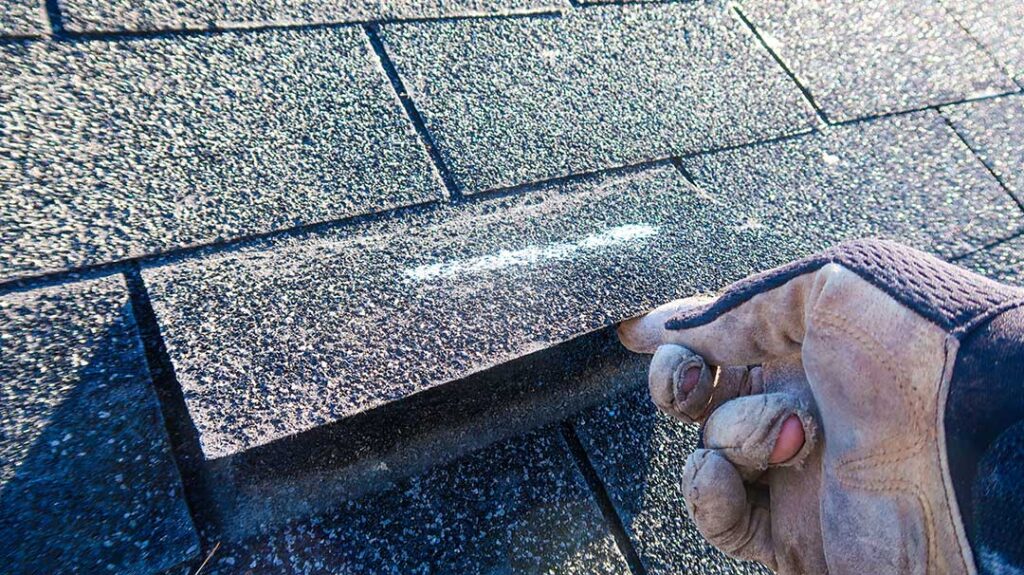
Roof discoloration is common in areas with changing seasons, shaded yards, and periods of damp weather. In Lewiston, NY, moisture from rain, snow, humidity, and freeze-thaw cycles can create conditions where algae, mold, mildew, moss, and lichen appear on roofing materials.
These growths do not all look alike, and they do not all create the same concerns. Learning to distinguish them helps residents decide whether a roof needs simple monitoring, careful cleaning, or further evaluation.
What does mold or mildew look like on a roof?
Mold and mildew usually appear as dark, patchy, or fuzzy growth on roofing surfaces. The color may range from black and dark green to gray, brown, or white, depending on the species, moisture level, and roofing material.
On asphalt shingles, possible signs include:
- Irregular black or gray blotches
- Thin green or brown film
- Fuzzy patches in shaded areas
- Discoloration that becomes more noticeable after rain
- Growth near roof edges, valleys, or areas beneath overhanging branches
Mildew tends to form a flatter surface coating. Mold may look thicker, more textured, or more concentrated in areas that stay damp. However, appearance alone cannot always identify the growth accurately. Some dark roof stains are algae rather than mold or mildew.
How can algae, moss, lichen, mold, and mildew be distinguished?
The most visible roof growth is often algae, not mold. Each type has recognizable characteristics, although more than one may occur on the same roof.
Algae usually creates flat, dark streaks or broad stains. On many asphalt roofs, it appears as black or blue-gray discoloration that follows the slope of the shingles.
Moss is raised and soft-looking. It may form bright green or yellow-green mats, especially where leaves collect or sunlight is limited. Moss can hold moisture against the roof and may lift shingle edges as it expands.
Lichen often looks crusty, pale green, gray, or white. It attaches firmly to the surface and may appear as small, circular patches or branching formations.
Mildew is generally a thin, surface-level coating that favors damp, poorly ventilated areas. It may look powdery, gray, green, or whitish.
Mold may appear as darker, uneven, fuzzy, or spotty growth. It is more likely to be associated with persistent moisture, organic debris, or water entering from a roof defect.
A roof can also have ordinary dirt, soot, pollen, or weathering that resembles biological growth. Rubbing or scraping the surface is not a reliable test and can damage protective granules.
Where does roof growth usually begin?
Growth commonly starts where moisture remains after the rest of the roof has dried. Shaded roof slopes are especially vulnerable, particularly beneath large trees or beside taller structures.
Other common starting points include:
- Roof valleys where water and debris collect
- Areas below clogged or overflowing gutters
- Around penetrations, flashing, and roof transitions
- Low-slope sections with slow drainage
- Places where leaves or pine needles remain trapped
- Roof sections with limited airflow
- Areas near damaged or missing shingles
In a four-season climate, repeated wetting and drying can make stains appear gradually. Snow cover may hide growth during winter, while spring rain often reveals darker patches that were difficult to see previously.
Does roof discoloration always mean there is a leak?
No. Staining does not automatically indicate a roof leak. Algae, mildew, moss, and lichen can grow on the exposed surface without water entering the attic or living space.
A leak becomes more likely when surface growth is accompanied by interior warning signs such as:
- Brown or yellow ceiling stains
- Damp attic insulation
- Musty odors indoors
- Peeling paint near ceilings
- Soft roof decking visible from the attic
- Water marks around chimneys, vents, or skylights
- Dripping or dampness after rain or snowmelt
Water can travel along rafters and roof decking, so an interior stain may not be directly below the exterior problem. A dry attic on one inspection also does not rule out a leak that occurs only during wind-driven rain or rapid snowmelt.
Why is moss more concerning than a flat stain?
Flat algae staining is usually a cosmetic and surface-maintenance issue. Moss is different because it can retain moisture and work beneath the edges of shingles.
As moss thickens, it may:

- Lift or separate shingle edges
- Trap leaves and organic debris
- Slow drainage
- Keep roofing materials wet for longer periods
- Increase the likelihood of damage during freezing weather
This does not mean every small patch of moss has caused immediate roof failure. It does mean the condition deserves closer attention, especially on older roofs or areas where shingles already curl, crack, or lose granules.
Can roof growth be identified safely from the ground?
Many conditions can be observed from the ground using binoculars. This is generally safer than climbing onto a sloped or wet roof.
Look for changes in color, texture, and pattern rather than relying on one dark spot. Compare shaded and sunny roof sections, and check whether discoloration follows the direction of water flow. Also observe nearby gutters, downspouts, tree branches, and areas where debris is collecting.
Avoid walking on shingles that are wet, icy, steep, brittle, or visibly damaged. Asphalt shingles can become slippery, and stepping on them may loosen granules or crack older material. Ladders also create fall risks, particularly on uneven ground or during windy conditions.
Should mold or mildew be scrubbed off?
Aggressive scrubbing, pressure washing, and scraping can remove protective granules and shorten the useful life of shingles. Household bleach or strong cleaning products can also damage plants, metals, siding, and roofing components if used carelessly.
Roof cleaning methods depend on the roofing material, the type of growth, the slope, and the condition of the surface. A low-pressure approach is generally less damaging than forceful washing, but even gentle cleaning can be unsafe or inappropriate if the roof is fragile.
Never mix cleaning chemicals. Keep runoff away from gardens, ponds, pets, and household drainage areas. If the roof is steep, difficult to access, near overhead wiring, or visibly deteriorated, avoiding roof access is the safest choice.
What conditions make roof growth return?
Growth often returns when the underlying moisture problem remains. Cleaning alone may not prevent recurrence if leaves continue to collect or a roof section stays shaded and damp.
Conditions that encourage repeated growth include:
- Overhanging branches that block sunlight
- Poor attic ventilation or trapped indoor moisture
- Clogged gutters and blocked downspouts
- Damaged flashing or slow drainage
- Heavy organic debris on the roof
- Persistent shade between closely spaced structures
- Nearby trees that drop leaves, needles, or small branches
Routine observation after storms and during spring cleanup can reveal whether a patch is expanding. New growth that spreads quickly, returns soon after cleaning, or appears alongside interior moisture deserves more careful investigation.
When does roof growth require prompt attention?
Prompt attention is warranted when growth is paired with lifted shingles, exposed underlayment, sagging roof areas, active dripping, or widespread deterioration. The same applies when the roof is difficult to inspect safely or when the suspected growth is inside the attic or living space.
Small, stable areas of surface discoloration may be monitored from the ground. However, extensive moss, recurring dampness, or signs of water entry should not be dismissed as merely cosmetic. Roof problems can worsen during heavy rain, strong winds, ice formation, and spring snowmelt.
For local households, the most useful first step is careful observation: identify the color and texture, note where the growth is located, check for debris and drainage problems, and look indoors for evidence of moisture. That information helps separate ordinary surface staining from conditions that may affect the roof system itself.
